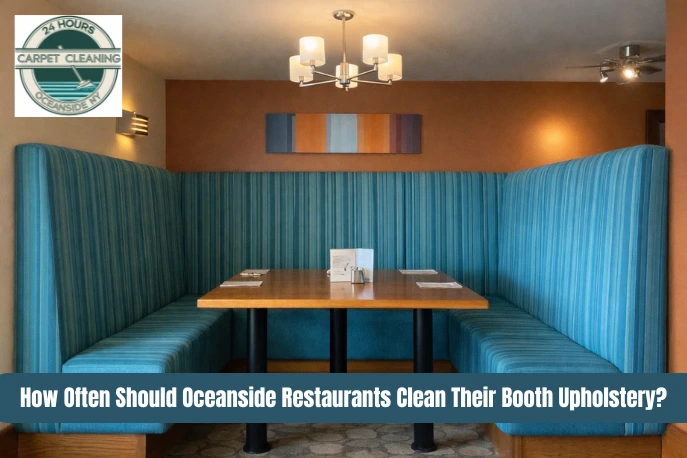
Oceanside restaurants should have professional booth upholstery cleaning every 2–4 months depending on customer volume, with high-traffic establishments (100+ daily customers) requiring monthly service and moderate-traffic restaurants needing quarterly cleaning. Professional cleaning costs $15–$35 per booth but prevents $200–$500 per booth replacement costs, maintains health code compliance, protects your restaurant’s reputation, and extends booth life from 3–5 years to 8–12+ years.
If you own or manage a restaurant in Oceanside and you’re wondering how often your booth upholstery needs professional cleaning, you’re making a decision that directly impacts your health code compliance, customer perception, bottom line, and even online reviews. Below, we’ll break down exactly how often different types of Oceanside restaurants need booth cleaning, what happens when you wait too long, why our coastal environment makes this more critical, and the real costs of neglecting this essential maintenance.
The Short Answer by Restaurant Type
Let’s cut straight to what you need to know based on your restaurant category and customer volume.
High-Volume Restaurants (100+ customers daily):
- Fast-casual dining: Every 4–6 weeks
- Family restaurants: Every 6–8 weeks
- Sports bars and pubs: Every 4–6 weeks
- Breakfast/brunch spots: Every 6–8 weeks
- Pizza restaurants with seating: Every 6–8 weeks
Moderate-Volume Restaurants (50–100 customers daily):
- Casual dining: Every 8–12 weeks
- Ethnic cuisine restaurants: Every 8–12 weeks
- Steakhouses: Every 10–14 weeks
- Seafood restaurants: Every 6–10 weeks (food oils penetrate faster)
- Cafes with booth seating: Every 10–14 weeks
Lower-Volume Restaurants (Under 50 customers daily):
- Fine dining establishments: Every 12–16 weeks
- Specialty restaurants: Every 12–16 weeks
- Coffee shops with limited food service: Every 14–20 weeks
For most Oceanside restaurants, the realistic schedule falls into the monthly to quarterly range. We’ve operated at 160 Lindbergh Ave serving hundreds of local restaurants for years these recommendations are based on real-world experience in our coastal environment, not generic national guidelines that don’t account for Oceanside’s unique challenges.
Why Oceanside Restaurants Need More Frequent Cleaning
If you ran your restaurant in Arizona or Nevada, you might get away with less frequent booth cleaning. Oceanside’s coastal location creates conditions that accelerate upholstery contamination dramatically.
Oceanside-specific factors affecting restaurant booth upholstery:
- High humidity (75–85% year-round): Creates perfect conditions for mold, bacteria, and odor development in booth foam and fabric
- Salt air penetration: Every time doors open, coastal salt air enters and deposits microscopic salt on all surfaces, attracting more moisture and grime
- Coastal tourism traffic: Summer beach visitors track sand, sunscreen, and saltwater residue into restaurants
- Year-round moderate temperatures: Bacteria thrive in 60–80°F range Oceanside rarely gets cold enough for bacterial die-off
- Higher outdoor dining moisture: Outdoor seating areas near coast expose furniture to more moisture and salt spray
Contamination rate comparison:
| Environment | Time to Visible Contamination | Bacterial Growth Rate | Odor Development |
|---|---|---|---|
| Dry inland climate | 12–16 weeks | Moderate | Slow (12+ weeks) |
| Humid inland | 8–12 weeks | Moderate-High | Moderate (8–10 weeks) |
| Oceanside coastal | 6–10 weeks | High | Fast (4–8 weeks) |
| Oceanside high-volume | 3–6 weeks | Very High | Very Fast (2–4 weeks) |
We’ve cleaned booths in comparable restaurants one in Oceanside and one in inland Nassau County. The Oceanside restaurant’s booths show visible contamination and wear 50–60% faster despite similar customer counts. That’s not bad luck it’s the physics and biology of operating in a coastal environment.
The Real Cost of Delaying Booth Cleaning
Let’s talk numbers so you understand what’s actually at stake for your restaurant.
Financial impact of professional cleaning vs. premature replacement:
| Cleaning Schedule | Annual Cleaning Cost (20 booths) | Booth Lifespan | Total 10-Year Cost |
|---|---|---|---|
| Monthly cleaning | $3,600–$8,400/year | 10–12 years | $36,000–$84,000 (cleaning only) |
| Quarterly cleaning | $1,200–$2,800/year | 7–9 years | $12,000–$28,000 + $8,000 (1 reupholstery) |
| Semi-annual cleaning | $600–$1,400/year | 4–6 years | $6,000–$14,000 + $20,000 (2 reupholsteries) |
| Annual/never | $300–$700/year | 3–4 years | $3,000–$7,000 + $30,000 (3 reupholsteries) |
Wait—annual cleaning looks cheapest? Not when you factor in:
- Business disruption during reupholstery (booths out of service 2–3 weeks)
- Lost revenue from reduced seating capacity during work
- Customer complaints and negative reviews about worn booths
- Health code violations and potential fines ($500–$5,000 per incident)
- Damage to restaurant reputation (online reviews mentioning “dirty booths”)
One Oceanside family restaurant we work with learned this the hard way. They skipped professional booth cleaning for 18 months trying to save money. When the health inspector visited, they noted visible staining and odor on booth upholstery, gave them 30 days to remediate, and threatened closure if not corrected. Emergency professional cleaning plus the stress and potential lost revenue if they’d been shut down far exceeded what regular maintenance would have cost.
The real cost isn’t just money—it’s the customer who doesn’t return because your booths looked or smelled dirty, the 1-star Yelp review mentioning “grimy seats,” and the loss of repeat business that’s the lifeblood of restaurant success.
Health Code Compliance and Inspection Requirements
For Oceanside restaurants, booth upholstery cleanliness isn’t optional—it’s a regulatory requirement.
Nassau County health code requirements:
- All food service seating must be maintained in sanitary condition
- Visible staining, odors, or contamination can result in violations
- Health inspectors can require documentation of regular professional cleaning
- Violations can result in point deductions affecting your grade
- Severe violations can lead to temporary closure until remediated
What health inspectors look for in booth upholstery:
- Visible food stains or grease accumulation
- Odors indicating bacterial growth or mold
- Torn or damaged fabric that can’t be properly sanitized
- Evidence of pest activity (crumbs attracting insects/rodents)
- General appearance of neglect
Inspection failure consequences:
- Minor violations: Point deductions on health grade
- Moderate violations: Required remediation within 30 days
- Severe violations: Immediate closure until corrected
- Fines: $500–$5,000 depending on severity
- Public posting of violations (visible to customers)
- Damage to online reputation (inspections are public record)
Our commercial carpet cleaning service includes booth upholstery cleaning with detailed invoices that satisfy health department documentation requirements and protect you during inspections.
Customer Perception: What Your Booths Tell Diners
Your booth upholstery communicates more about your restaurant than you realize.
What customers unconsciously assess within 30 seconds of sitting:
- Overall cleanliness and hygiene standards (if booths are dirty, what about the kitchen?)
- Attention to detail and pride in establishment
- Whether the restaurant is well-managed
- If they feel comfortable eating food prepared here
- Whether they’ll recommend the restaurant to friends
The online review reality: Studies show that 68% of diners check online reviews before choosing a restaurant. Words like “dirty,” “grimy,” “stained,” or “smelly” in reference to seating are among the most damaging descriptors for restaurant reputation.
We’ve seen it happen: one negative review mentioning “gross booths” can cost a restaurant 20–50 potential customers who read that review and choose competitors. At average check sizes of $25–$60 per person, that’s $500–$3,000 in lost revenue from one review about dirty upholstery.
One casual dining restaurant in Rockville Centre saw their Google rating drop from 4.2 to 3.7 stars over six months, with multiple reviews mentioning booth cleanliness. After implementing quarterly professional booth cleaning and addressing the issue, their rating recovered to 4.1 within four months as new positive reviews came in. The owner told us the $1,200 quarterly cleaning cost was the best marketing investment he’d made far more effective than paid advertising.
Traffic-Based Cleaning Schedule Framework
Here’s how to determine your specific restaurant’s booth cleaning frequency.
Step 1: Calculate your weekly customer count Track how many customers sit in booths weekly (not total restaurant traffic just booth seating).
Step 2: Assess your food service type
- High-grease food (burgers, fried items): More frequent cleaning needed
- Moderate-grease (general American fare): Standard frequency
- Low-grease (salads, lighter fare): Slightly less frequent acceptable
Step 3: Factor in your customer demographics
- Families with young children: More spills and crumbs (increase frequency)
- Adult-only clientele: Less aggressive contamination (standard frequency)
- Late-night bar crowd: More spills, potential vomit incidents (increase frequency)
Recommended frequency by weekly booth customer count:
| Weekly Booth Customers | Food Type | Recommended Cleaning | Monthly Cost (20 booths) |
|---|---|---|---|
| 500+ customers | High-grease | Every 4 weeks | $300–$700 |
| 300–500 customers | High-grease | Every 6 weeks | $200–$470 |
| 300–500 customers | Moderate-grease | Every 8 weeks | $150–$350 |
| 150–300 customers | Moderate-grease | Every 10 weeks | $120–$280 |
| 150–300 customers | Low-grease | Every 12 weeks | $100–$240 |
| Under 150 customers | Any type | Every 14–16 weeks | $80–$200 |
These ranges account for Oceanside’s coastal environment. Restaurants in dry climates can often extend these intervals by 20–30%, but coastal restaurants cannot without risking accelerated contamination.
Signs Your Booths Need Cleaning More Frequently
Even if you’re on a regular schedule, watch for these indicators that you need to increase frequency.
Visual warning signs:
- Visible stains appearing within 2–3 weeks of last cleaning
- Fabric looks dingy or darker than it should
- Booth edges (where customers slide in/out) showing heavy wear
- Food particles visible in seams and crevices
- Discoloration from body oils on headrest areas
Operational warning signs:
- Customers commenting on booth appearance or cleanliness
- Staff mentioning booths look dirty or smell bad
- Difficulty removing stains with spot cleaning between professional services
- Increased complaints about restaurant cleanliness in online reviews
- Health inspector noting booth condition during visits
Health and odor signs:
- Musty or stale smell when entering restaurant
- Food odors that linger in upholstery rather than dissipating
- Staff or customers mentioning stuffiness or poor air quality
- Visible mold or mildew in booth seams (rare but critical)
If you see three or more of these signs, your current cleaning frequency is insufficient. Call us at +1 516-905-5479 for assessment and schedule adjustment.
What Professional Booth Cleaning Actually Removes
When we perform upholstery cleaning on restaurant booths, the contamination we extract is always shocking even in restaurants that appear clean on the surface.
From a typical 10-booth restaurant section (not cleaned professionally in 4+ months):
- 8–15 gallons of contaminated extraction water
- Visible food particles (even after daily spot cleaning by staff)
- Grease and oils (from food and body contact)
- Bacterial colonies numbering in the millions
- Mold and mildew (in restaurants with high humidity)
- Body oils, sweat, and skin cells
- Beverage residues (sugary drinks create sticky surfaces that attract more dirt)
- Allergens and dust mites
What daily restaurant cleaning cannot remove:
- Contamination deep in cushion foam (staff cleaning reaches only surface)
- Grease that has penetrated fabric backing
- Bacterial colonies growing in moisture-rich foam environments
- Odor sources embedded in cushion materials
- Stains that have set and bonded to fabric fibers
Our truck-mounted hot water extraction system delivers 180–200°F water at 400+ PSI pressure. This combination penetrates deep into booth cushions, dissolving grease and oils, killing bacteria on contact, and extracting everything through powerful suction that removes 95% of moisture.
For restaurant booths with heavy contamination, we use specialized degreasers and enzymatic pre-treatments that break down food oils and proteins at the molecular level before extraction. This achieves cleaning results that portable equipment and DIY methods simply cannot match.
Daily and Weekly Maintenance Between Professional Cleanings
Professional cleaning every 2–4 months is essential, but daily maintenance extends the time between professional services and keeps booths in better condition.
Daily maintenance protocols (closing staff):
1. Remove all debris and crumbs
- Thoroughly vacuum booth seats and backs
- Use crevice tool along seams and edges
- Check under cushions if removable
- Wipe down booth surfaces with damp cloth
2. Spot-clean visible stains immediately
- Address spills within 5 minutes when possible
- Blot (don’t rub) liquid spills
- Use appropriate cleaner for stain type
- Dry thoroughly with fans if needed
3. Check for damage
- Note any tears, pulls, or significant staining
- Document for management review
- Consider temporary repair if needed
Weekly maintenance protocols:
1. Deep vacuum all booths
- Remove cushions if possible
- Vacuum booth platform underneath
- Vacuum booth backs and sides thoroughly
- Pay special attention to edges and seams
2. Fabric treatment
- Apply fabric protector spray monthly (helps repel stains)
- Use odor-neutralizing spray weekly
- Ensure proper ventilation during application
3. Inspection and documentation
- Photograph booth condition monthly
- Track wear patterns and problem areas
- Use documentation to optimize professional cleaning schedule
4. Check moisture levels
- Feel cushions for dampness (indicates humidity issues)
- Use fans to improve air circulation
- Address any moisture problems immediately
Proper daily maintenance doesn’t replace professional cleaning, but it can extend intervals by 10–20% for moderate-traffic restaurants and significantly improve booth appearance between professional services.
Special Considerations for Different Booth Materials
Not all booth upholstery is created equal different materials have different cleaning needs and wear patterns.
Vinyl booths (most common in restaurants):
- Pros: Easiest to clean, most stain-resistant, durable, cost-effective
- Cons: Can crack over time, absorbs oils from food and bodies, shows wear patterns
- Cleaning frequency: Every 8–12 weeks for moderate traffic
- Special care: Requires conditioning after cleaning to prevent cracking
Our fabric upholstery cleaning methods are adjusted for vinyl’s specific needs, including conditioning treatments.
Fabric booths (upscale restaurants):
- Pros: More comfortable, upscale appearance, various design options
- Cons: Absorbs stains quickly, harder to clean, shows wear faster
- Cleaning frequency: Every 6–10 weeks for moderate traffic
- Special care: Requires fabric-specific cleaning solutions and protection
Leather booths (high-end establishments):
- Pros: Premium appearance, comfortable, ages well with care
- Cons: Expensive, requires specialized cleaning, can crack without conditioning
- Cleaning frequency: Every 10–14 weeks
- Special care: Needs leather conditioning after every cleaning
Our leather furniture cleaning service includes conditioning that protects leather from Oceanside’s humid coastal air.
Microfiber booths (modern casual dining):
- Pros: Comfortable, stain-resistant initially, modern look
- Cons: Oils penetrate quickly, shows wear patterns, requires specific cleaning
- Cleaning frequency: Every 6–10 weeks
- Special care: Never use water-based cleaners (causes water spots)
Our microfiber upholstery cleaning uses solvent-based methods appropriate for microfiber.
Dealing with Specific Restaurant Challenges
Different restaurant types face unique booth cleaning challenges.
Family restaurants with kids:
- More food spills and crumbs
- Sticky residues from juice and soda
- Crayons and art supplies staining
- Recommend: Every 6–8 weeks cleaning, immediate spill response
Sports bars and pubs:
- Beer and alcohol spills (creates odors)
- Late-night crowd more likely to spill
- Potential vomit incidents
- Recommend: Every 4–6 weeks cleaning, odor treatments
Breakfast/brunch establishments:
- Syrup and butter residues (extremely sticky)
- Coffee stains
- Grease from breakfast foods
- Recommend: Every 6–8 weeks cleaning, grease-specific treatments
Seafood restaurants:
- Fish oils penetrate fabric deeply
- Strong food odors absorb into upholstery
- Higher moisture from ocean-related decor
- Recommend: Every 6–10 weeks cleaning, odor neutralization
Pizza restaurants:
- Grease from pizza and cheese
- Tomato sauce stains
- Heavy family traffic
- Recommend: Every 6–8 weeks cleaning, grease extraction focus
Scheduling Around Your Business Operations
The biggest concern we hear from restaurant owners: “I can’t afford downtime for booth cleaning.”
Here’s the reality: With proper scheduling and our equipment, booth cleaning causes minimal business disruption.
Our restaurant cleaning scheduling options:
- After-hours cleaning (post-closing, typically 11pm–3am)
- Between-service cleaning (2pm–4pm between lunch and dinner)
- Day-before-closed cleaning (for restaurants closed Sundays/Mondays)
- Section-by-section cleaning (clean half the booths at a time)
- Early morning cleaning (5am–10am before opening)
Our truck-mounted system removes 95% of moisture during extraction, reducing dry time to 2–4 hours. Combined with commercial air movers, booths are completely dry and ready for service within one shift.
Typical after-hours cleaning schedule:
- 11:00 PM: Restaurant closes, we arrive and begin setup
- 11:15 PM: Pre-vacuuming begins
- 11:45 PM: Pre-treatment application
- 12:00 AM: Hot water extraction begins
- 2:30 AM: Extraction complete, air movers positioned
- 3:00 AM: Post-inspection, we leave
- 10:00 AM: Booths completely dry, ready for lunch service
We’ve cleaned hundreds of Oceanside restaurant booths during off-hours, and most owners report zero customer awareness that cleaning happened—they just notice the booths look and smell great.
Cost-Benefit Analysis for Restaurant Owners
Let’s break down the real numbers so you can make an informed business decision.
Typical costs for 20-booth restaurant:
- Professional cleaning per visit: $300–$700 (depends on booth size and condition)
- Quarterly cleaning (4x/year): $1,200–$2,800 annually
- Bi-monthly cleaning (6x/year): $1,800–$4,200 annually
- Monthly cleaning (12x/year): $3,600–$8,400 annually
Cost of premature booth replacement:
- Vinyl booth reupholstery: $200–$400 per booth
- Fabric booth reupholstery: $300–$600 per booth
- Leather booth reupholstery: $500–$1,000 per booth
- 20-booth restaurant full reupholstery: $4,000–$12,000
Break-even analysis: If regular bi-monthly cleaning ($3,000/year) extends booth life from 4 years to 9 years, you avoid one full reupholstery ($8,000). That’s $8,000 savings minus $15,000 additional cleaning costs over 5 extra years = cost increase of $7,000.
But here’s what this calculation misses:
Hidden costs of infrequent cleaning:
- Lost customers from negative reviews: $5,000–$20,000+ annually
- Health code violations and fines: $500–$5,000 per incident
- Business disruption during emergency reupholstery: $2,000–$8,000
- Damage to restaurant reputation: Immeasurable but significant
- Higher daily cleaning labor: $1,000–$3,000 annually
- More frequent spot-cleaning supplies: $500–$1,000 annually
When you factor in these hidden costs, regular professional cleaning typically saves restaurants $3,000–$10,000 annually compared to reactive/minimal cleaning approaches plus you maintain a consistently clean, attractive dining environment instead of progressively dirtier booths that hurt your business.
Service Areas and Professional Help
We serve all of Oceanside and surrounding areas where restaurants face similar coastal environmental challenges, including commercial services in Baldwin, Rockville Centre, Freeport, Lynbrook, Inwood, Valley Stream, Long Beach, and Merrick.
Our professional carpet cleaning service extends to complete restaurant cleaning, including dining room carpets, entrance mats, and kitchen floor surfaces.
Take Action to Protect Your Restaurant Investment
If you own or manage an Oceanside restaurant, assess your booth upholstery today:
Immediate action steps:
- Inspect all booths for the warning signs mentioned in this article
- Calculate your weekly booth customer count
- Determine if your current cleaning frequency is adequate
- Schedule professional cleaning if it’s been 3+ months
- Set up regular maintenance schedule to prevent future problems
Call us today at +1 516-905-5479 for a free restaurant booth assessment and cleaning quote. We’ll evaluate your booth condition, recommend optimal cleaning frequency for your specific restaurant type and traffic, and provide pricing for regular maintenance that fits your budget and schedule.
Your booths represent a significant investment $4,000–$20,000+ for a typical restaurant. Don’t let contamination, neglect, or delayed maintenance destroy them in 3–4 years when proper care could give you 10–12+ years of service. Plus, clean booths protect your health code compliance, enhance customer experience, and safeguard your online reputation all critical to restaurant success.
Restaurant ownership is challenging enough. Partner with professionals who understand the specific needs of Oceanside food service establishments and can help you maintain the clean, attractive dining environment your customers expect and deserve.
24 Hours Carpet Cleaning Oceanside
160 Lindbergh Ave, Oceanside, NY 11572
+1 516-905-5479
Available 24/7 for emergency restaurant cleaning service